

ETS Surgery for Sweaty Hands

Anyone who suffers from hyperhidrosis understands the challenges, limitations, and discomfort it causes in day to day life. The most common form of hyperhidrosis is palmar hyperhidrosis, the severe sweating of the hands. Fortunately, there have been significant improvements in the treatment of palmar hyperhidrosis mainly in part due to endoscopic thoracic sympathectomy (ETS) surgery.
What is ETS Surgery
ETS surgery is the most effective treatment for patients with severe palmar hyperhidrosis. Introduced in the early 1990’s, ETS for hyperhidrosis has evolved significantly as our understanding of the pathophysiology of palmar hyperhidrosis has increased. The ETS surgery procedure is a very safe minimally invasive procedure performed as an outpatient. Our patients leave the hospital several hours after the procedure and resume all of their normal activities within several days of surgery.
The surgical technique of the ETS procedure varies significantly between surgeons, which accounts for the dramatic difference in outcomes reported in the literature. At the Center for Hyperhidrosis at New York Presbyterian Hospital, we follow our patients and perform post-operative surveys to assess their results from the ETS surgery. This is the only way to know if our technique is achieving the desired outcome of relieving palmar hyperhidrosis, without creating new unwanted symptoms. Over the past 18 years we developed minimally invasive ETS-T3, for patients with severe palmar hyperhidrosis, and patient satisfaction exceeds 98%.

The ETS Procedure: What to Expect
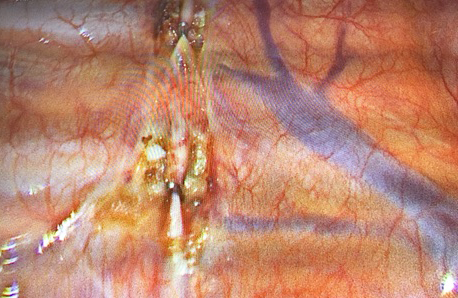
ETS treatment procedure is minimally invasive and performed under general anesthesia, where two microscopic incisions are made in the armpit. These small incisions are barely visible within weeks of surgery. Using CO2 insufflation to compress the lungs, a small camera is placed into the chest cavity.
During ETS treatment, we do not deflate the lungs, and therefore after completing the procedure, the lungs quickly return to their normal size and function, usually without any side effects. After fully identifying the sympathetic nerve anatomy, we isolate the T3 ganglion from the rest of the sympathetic nerve by placing a very small titanium clip placed above T3 ganglion.
Post Procedure: ETS Side Effects
ETS side effects will range patient to patient, but overall should be very minor. There may be some sensitivity at the incision site immediately after the procedure, but patients should not anticipate scarring. In our experience with ETS surgery, there is rarely any need for strong post-procedure pain medication, and most patients resume normal activities with several days.
A Note About Compensatory Sweating
One potential palmar hyperhidrosis surgery side effect is compensatory sweating. Compensatory sweating is the excessive sweating of the stomach, legs, thighs, or back. Fortunately, patients treating palmar hyperhidrosis are least likely to experience compensatory sweating compared to other forms of hyperhidrosis. At the Center for Hyperhidrosis, we utilize a technique called ETS-T3, which results in the least amount of post-procedure compensatory sweating.
ETS Surgery Follow Up Protocol
Because we have performed ETS-T3 on 4,000+ patients, and have also performed detailed follow-up questionnaires, we are confident in the results you will see. After awakening in the recovery room, you can expect your hands to be dry and never to sweat severely again, although results can vary. Most patients also achieve significant improvement in armpit sweating (about an 80% reduction in severity). Up to 50% of patients also achieve significant reduction in sweating of their feet. The pathophysiology of both the reduction of foot sweating and the development of compensatory sweating is unclear. We believe that our technique of ETS-T3, results in the least amount of compensatory sweating, and excellent patient satisfaction.
ETS Surgery Frequently Asked Questions
Who is a good candidate for ETS surgery for hyperhidrosis?
ETS surgery for hyperhidrosis is best suited for people with severe palmar hyperhidrosis (excessive hand sweating) — also called surgery for sweaty hands — that has not responded adequately to conservative treatments such as prescription antiperspirants, iontophoresis, or Botox injections.
Good candidates are generally in good overall health, understand the potential risks including compensatory sweating, and have realistic expectations about outcomes. A consultation with the surgical team is the best way to determine whether endoscopic thoracic sympathectomy is appropriate for your specific situation.
Why is ETS primarily recommended for sweaty hands rather than sweaty underarms?
This is one of the most important things to understand before pursuing surgery. ETS works by interrupting the sympathetic nerve signal at the T3 ganglion — a level that directly controls sweating in the hands. Palmar hyperhidrosis responds exceptionally well at this nerve level, which is why the procedure produces such consistent results for hand sweating specifically.
Axillary (underarm) sweating is controlled by a different part of the sympathetic chain, and targeting it with ETS requires interrupting the nerve at a different level — which carries a significantly higher risk of compensatory sweating. The risk-to-benefit profile is less favorable for underarm sweating as the primary complaint. Many patients do experience meaningful improvement in underarm sweating as a secondary benefit of ETS-T3, but it is not the primary indication. Patients whose main concern is underarm sweating are typically better served by treatments like Botox injections or miraDry rather than surgical sympathectomy.
What actually happens during ETS surgery?
ETS is performed under general anesthesia as an outpatient procedure — meaning you go home the same day. Two tiny incisions are made in each armpit, each barely visible after healing.
A small amount of carbon dioxide gas is used to create space for the surgeon to safely visualize the sympathetic nerve. A small camera guides the procedure, and after fully identifying the nerve anatomy, a small titanium clip is placed above the T3 ganglion to interrupt the nerve signal responsible for excessive sweating. The entire palmar hyperhidrosis surgery typically takes under an hour.
Why does surgical technique matter — and what is ETS-T3?
The level at which the sympathetic nerve is interrupted determines both effectiveness and the risk of side effects. The Center for Hyperhidrosis uses a specific approach called ETS-T3, which targets the T3 ganglion — a level associated with excellent outcomes for palmar hyperhidrosis and the lowest rates of compensatory sweating.
Different surgeons use different techniques (T2, T3, T4, or combinations), which explains why outcomes reported in the medical literature vary so significantly. When researching hyperhidrosis surgeons in NYC or elsewhere, asking about the specific technique used and whether the surgeon tracks post-operative outcomes is important for making an informed comparison.
How effective is ETS, and how long do results last?
Based on post-operative patient surveys collected at our center over more than 18 years, ETS-T3 has been associated with patient satisfaction rates exceeding 98%. In most cases, patients wake up in the recovery room with dry hands and do not experience severe palm sweating again.
ETS is generally considered a permanent treatment for hyperhidrosis because the sympathetic nerve pathway remains interrupted long term. While individual variation exists, the procedure consistently delivers dramatic improvement for palmar hyperhidrosis when performed at an experienced center.
Will ETS help with armpit or foot sweating too?
Many patients see meaningful improvement in areas beyond the hands. Approximately 80% of patients experience significant reduction in underarm (axillary) sweating. Up to 50% of patients see significant improvement in foot (plantar) sweating.
These secondary benefits are not guaranteed, but they are common. Facial sweating and blushing may also improve depending on individual anatomy.
What is compensatory sweating, and how likely is it?
Compensatory sweating is a well-known potential side effect of ETS. It occurs when the body redirects sweating to other areas — typically the torso, back, thighs, or abdomen — after the sympathetic nerve is interrupted.
For most patients it is mild and a very acceptable trade-off for dry hands. Patients treating palmar hyperhidrosis have the lowest rates of compensatory sweating compared to patients treating facial or axillary hyperhidrosis. The ETS-T3 technique used at this center is specifically designed to minimize this effect.
Can ETS be reversed if I experience side effects?
The titanium clip used during ETS can technically be removed; however, reversal of the procedure is not guaranteed. Nerve recovery varies from person to person, and symptom improvement after clip removal cannot be predicted with certainty.
This is why careful patient selection and a thorough discussion of risks and benefits before surgery are so important. Our team takes this process seriously — understanding your full medical history and expectations is a central part of the pre-operative consultation.
Is ETS surgery safe? What are the risks?
ETS is considered a very safe, minimally invasive procedure when performed by an experienced surgical team. A thorough pre-operative consultation will review your individual risk profile.
Known potential complications (which are uncommon) include compensatory sweating, temporary or permanent Horner’s syndrome if the nerve is affected at the wrong level (rare with precise technique), pneumothorax (very rare with the carbon dioxide method used here), and general anesthesia risks. The center does not deflate the lungs during the procedure, which reduces recovery time and pulmonary risk.
How long is recovery, and when can I return to normal activities?
Recovery from ETS is typically very fast. Most patients leave the hospital within a few hours of the procedure and experience only mild discomfort at the incision sites — strong pain medication is rarely needed.
Most patients resume normal daily activities within a few days. Desk work or light activity is typically possible within 2–3 days, and physical activity within 1–2 weeks.
Will I have visible scars after ETS?
ETS is performed through tiny incisions hidden in the underarm area. Because the incisions are so small — and located in a naturally concealed spot — most patients find that the marks become very difficult to notice once healing is complete.
There may be some sensitivity at the incision site immediately after the procedure, but significant scarring is not anticipated.
How does ETS change daily life for patients with hyperhidrosis?
For many patients, the most profound change after ETS is not physical — it’s social and emotional. Hyperhidrosis can create constant low-level anxiety around handshakes, first impressions, and situations where hands are visible. Many patients describe a sense of freedom after surgery that goes well beyond dry palms.
In practical terms, patients often report improvements in activities that were previously difficult or avoided: handshakes and professional interactions, writing and using electronic devices, playing musical instruments, sports and gym activities, and wearing clothing without worry. The relief of no longer managing the condition — no more towels, no more avoidance strategies — is frequently cited as life-changing.
Do I have to try other treatments before considering ETS?
ETS is typically recommended for patients with severe palmar hyperhidrosis for whom other treatments have not provided adequate relief. Conservative options include prescription-strength antiperspirants, iontophoresis (a water-based electrical current treatment), Botox injections, and oral medications.
That said, if your sweating is significantly impacting your quality of life, a surgical consultation can quickly determine whether you are an appropriate candidate. There is no obligation to exhaust every option before having a conversation with the team.
Is ETS covered by insurance?
Coverage for palmar hyperhidrosis surgery varies by insurance provider and individual policy. Some plans cover ETS when conservative treatments have been tried and documented; others classify it as elective.
Our team can help review your benefits and discuss potential out-of-pocket costs before surgery. We encourage patients to contact us before assuming coverage is unavailable — in many cases, coverage is possible with the right documentation.
What should I expect on the day of surgery?
ETS is performed as an outpatient procedure — you will not need an overnight hospital stay. You will be placed under general anesthesia for the duration of the surgery, which typically takes under an hour for both sides.
You will spend a few hours in the recovery room before being discharged and will need someone to drive you home. Your hands will typically be dry when you wake up in recovery. Patients are encouraged to wear comfortable, loose-fitting clothing on the day of surgery.